
The little-known origin of JPL: Caltech’s Suicide Squad got kicked into a wash and founded the space age
Tuesday, Aug 25, 2026, 12:00 PM PDT
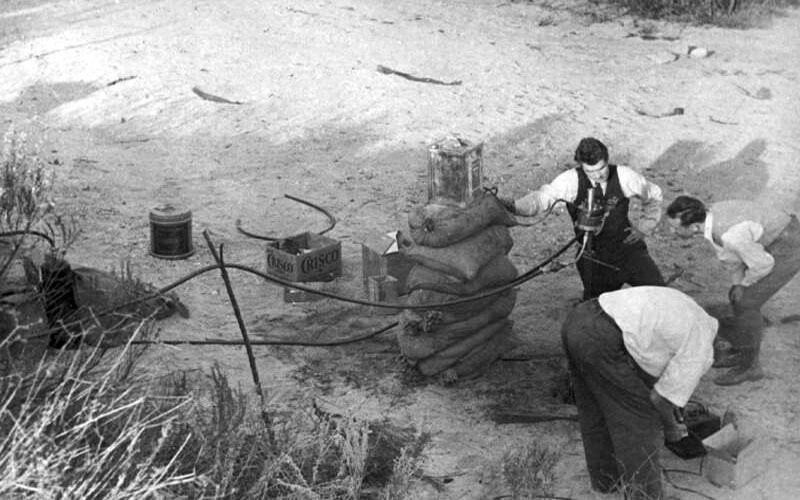
NASA’s Jet Propulsion Laboratory did not begin as a gleaming federal campus on Oak Grove Drive. It began because a handful of Caltech kids, plus two amateurs who were not even enrolled, kept blowing things up on campus, and the Institute decided the safest place for that hobby was a dry riverbed.
Meet the delinquents
In 1936 the core of the group was easy to pick out of a yearbook, if you ignored the two who were not in it.
Frank J. Malina was the Caltech graduate student and the grown-up in the room, relatively speaking. He did the math. He worked under aeronautics legend Theodore von Kármán at the Guggenheim Aeronautical Laboratory, better known as GALCIT.
Jack Parsons was a self-taught chemist with no degree, a taste for poetry, and an alarming comfort level with things that ignite. Ed Forman was the mechanic who could build a motor out of junkyard parts. They were not Caltech students. They showed up after a campus lecture on rocket planes by von Kármán’s assistant, William Bollay, and refused to leave the idea alone.
They picked up help from other GALCIT students, including Apollo M.O. “Amo” Smith and Hsue-shen Tsien (later Qian Xuesen). A famous 1936 test-stand photo in the Arroyo Seco also puts Rudolph Schott in the frame. Serious scientists thought rockets were comic-strip stuff. This crew treated that as a dare.
First they went to the wash. Then they got invited back. Then they got evicted.
The tidy legend is that a professor marched them off campus and into the wilderness. The real sequence is funnier.
Caltech did not want live rocket motors next to the wind tunnel. So on Halloween 1936 (JPL still treats this as its birthday) they hauled a homemade oxygen-and-alcohol motor into the Arroyo Seco, the dry wash above Devil’s Gate Dam, a short hike from campus and a long way from anyone’s stained-glass windows. The first three tries fizzled. The fourth lit the oxygen line and sprayed fire. They ran. They called it a success, because nobody died and they learned several things not to do.
The tests worked well enough that von Kármán, against the skepticism of other faculty (Clark Millikan was not a fan), let them set up on campus.
That is when the nickname arrived. A nitrogen-dioxide misfire in the GALCIT lab, a gauge fragment punched into a wall, and enough noise that classmates started calling them the Suicide Squad. At that point the Institute’s patience expired. The squad was told, in so many words, to take their explosions somewhere a building could not file a complaint.
There is no single famous “get off my lawn” memo with one dean’s name on it. Von Kármán was the official who had let them in. Campus collectively decided they should go back out. So they did, back to the same Arroyo Seco wash, on land later leased from Pasadena, in tarpaper shacks von Kármán would eventually help turn into a lab.
Then the Army showed up, and the wash got a letterhead
The Army wanted airplanes that could get off short runways. The Suicide Squad delivered JATO, jet-assisted takeoff rockets. Parsons helped invent practical castable solid propellant. Malina and von Kármán put theory under the chaos. By late 1943 the group was writing proposals under a new name: Jet Propulsion Laboratory. Von Kármán became the first director. Malina followed as acting director. The wash stopped being a hiding place and became the address.
That is the little-known fact hiding in plain sight on Oak Grove Drive. JPL is not a lab that wandered into La Cañada Flintridge. It is what happens when Caltech students (and two uninvited chemists) get banned from the nice buildings and are told to go blow things up in the arroyo instead. They did. The arroyo never recovered. The solar system has been hearing from them ever since.
Related articles


lacanada.us